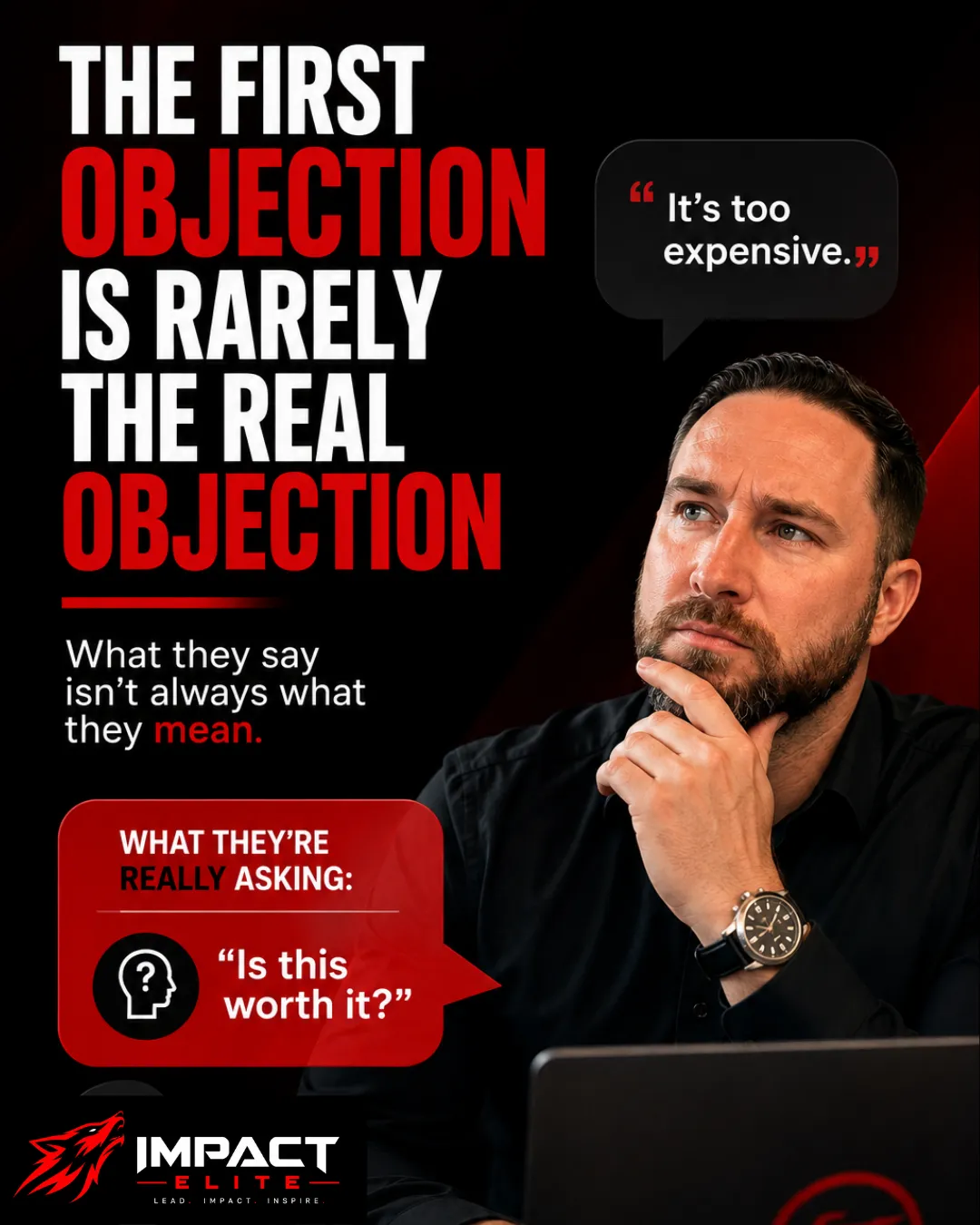
The First Objection Is Rarely the Real Objection
The First Objection Is Rarely the Real Objection
When a prospect raises an objection, what's your first instinct?
For many salespeople, it's to immediately defend their product, justify the price, or overcome the objection as quickly as possible. But in most cases, this approach misses the real issue.
The truth is the first objection is rarely the real objection.
Why Prospects Don't Always Tell You the Real Concern
People don't always communicate exactly what they're thinking. Sometimes they don't know how to explain their concern, and other times they use a "safe" objection instead of revealing what's really holding them back.
For example:
"It's too expensive." could mean, "I don't see enough value yet."
"I need to think about it." could mean, "I'm not convinced this is the right solution."
"I need to speak to my business partner." could mean, "I'm not confident enough to make the decision."
If you respond to the surface objection, you'll never address the real concern.
Pause Before You Respond
Instead of jumping into a sales pitch, slow the conversation down.
A simple question like:
"What do you mean by that?"
can completely change the direction of the conversation.
It encourages the prospect to explain their thinking and often reveals the real obstacle.
You can also ask:
"Can you tell me a little more about that?"
"What's your biggest concern?"
"Help me understand what's behind that."
These questions show you're listening rather than trying to win an argument.
Validate Before You Solve
One of the biggest mistakes in objection handling is trying to solve a problem before you've fully understood it.
Before offering a solution:
Listen without interrupting.
Acknowledge the concern.
Repeat back what you've heard.
Ask a follow-up question to uncover the real issue.
For example:
Prospect: "It's more than we wanted to spend."
You: "I understand. When you say it's more than you expected, is your main concern the investment itself, or making sure you'll see a return on it?"
That single question can reveal whether the objection is about budget, risk, timing, or confidence.
Better Questions Lead to Better Conversations
Sales isn't about having the perfect answer.
It's about asking better questions.
When prospects feel heard and understood, they're far more likely to share what's really stopping them from moving forward. Once you know the real objection, you can have a meaningful conversation instead of making assumptions.
Final Thought
The next time you hear an objection, resist the urge to respond immediately.
Instead, ask:
"What do you mean by that?"
You may discover that the objection isn't the problem at all—it's simply the starting point of a much more valuable conversation.
Ready to Improve Your Objection Handling?
At Impact Elite, we help business owners and sales professionals develop the confidence, questioning techniques, and negotiation skills needed to close more deals without being pushy.
Because the best salespeople don't just answer objections—they uncover the real ones first.
Book a call a free STRATEGY call now!


