Objections That Actually Mean They Want to Buy
Objections That Actually Mean They Want to Buy
Most salespeople hear an objection and immediately think: “The deal is lost.”. They panic, start discounting, or back away from the conversation.
But here’s the truth most high-level closers understand: Objections are rarely rejection.. In fact, many objections are actually buying signals. They’re simply the buyer’s way of saying: “I’m interested… I just need more certainty before I decide.”.
Once you understand this shift, closing stops feeling like pressure and starts feeling like guidance.
Why Buyers Raise Objections
Think about the last time you made a big purchase. You probably asked questions like:
“Can I think about it?”
“How does this compare?”
“What if it doesn’t work?”
You weren’t rejecting the product—you were protecting your decision. Buyers naturally want reassurance before committing. When someone raises an objection, they’re often closer to buying than you think.
Elite closers decode them; average salespeople fight them..
The Psychology Behind Sales Objections
Objections happen because buyers experience three internal concerns:
Risk: People want to avoid a bad decision. They wonder if it will work or if they will regret the investment. Your job is to reduce risk, not force urgency.
Uncertainty: If buyers don’t fully understand the outcome, they hesitate. When someone says “It’s too expensive,” they often mean “I’m not yet convinced of the value.”. The solution is clarity.
Decision Confidence: Sometimes buyers simply need reassurance that they’re making the right choice. Objections like “I need to talk to my partner” are often requests for confidence, not resistance.
Common Signals in Disguise
“I need to think about it.” → Translation: “I’m interested, but I want to ensure I'm making the right choice.”.
“It’s too expensive.” → Translation: “I don’t yet see the full value.”.
“I need to speak to my partner.” → Translation: “This is important enough to involve someone else.”.
“We’re already working with someone.” → Translation: “Convince me why you’re different.”.
The Shift From Selling to Guiding
The biggest transformation happens when you stop trying to push the sale and instead guide the decision. This means asking deeper questions, understanding the real problem, and connecting your solution to their desired outcome.
How 10X Closers Think Differently
At Impact Elite, we teach sales from a 10X perspective. While most try to handle objections, 10X closers anticipate them. They design conversations that build trust early and clarify problems before they become barriers. By the time an objection appears, it is already halfway solved.
The Real Secret to Closing
Closing isn’t about pressure; it’s about psychology. When you understand what buyers are really saying, you stop fearing objections and start recognizing them as milestones on the roadmap to "Yes".
Ready to master this skill? Discover the frameworks and strategies inside our free course:
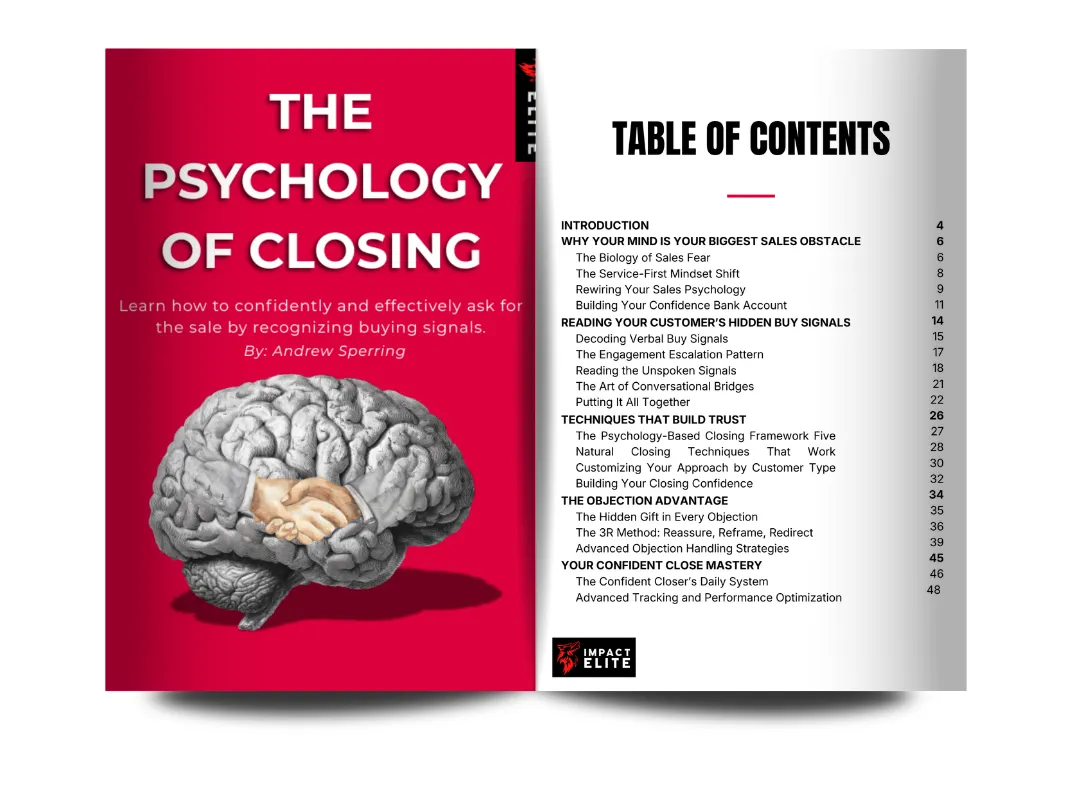
The Psychology of Closing – Free Online Course
The psychology behind buying decisions
How to handle objections confidently
Questions that move conversations forward
A system to turn discussions into deals
👉 Join the course and start closing with confidence: https://fosydaxgdacwrpcxd5xw.app.clientclub.net/courses/offers/8bc7cf12-478c-4b15-b6b1-6d9e81b2c61c


